How a Salon Franchise Model Operates: A Complete Guide for Entrepreneurs
India’s salon and beauty industry is one of the fastest-growing service sectors growing at a ~15% CAGR YoY, driven by rising lifestyle aspirations, grooming awareness, and repeat consumer demand. Within this ecosystem, the salon franchise model has emerged as a preferred route for entrepreneurs, offering a structured way to enter the market with reduced risk.
Table Of Content
- What is a Salon Franchise Model?
- The Core Pillar: Standardisation
- Centralised Supply Chain Management
- Training & Staffing Support
- Technology Integration
- Marketing & Brand Building
- Revenue Streams in a Salon Franchise
- Key Success Factors in a Salon Franchise
- 1. Strategic Location
- 2. Strong Repeat Customer Base
- 3. Brand Recognition
- 4. Skilled Staff & Service Consistency
- 5. Operational Efficiency
- Challenges in the Franchise Model
- Why Salon Franchises Are Growing in India
- Final Thoughts
The salon franchise industry, particularly in India, is massive, featuring thousands of individual outlets operated by major brands. In India, over 10,000 organized salons operate, with the sector growing at a 25% annual rate.
But how does a salon franchise actually work behind the scenes? Let’s break it down.
What is a Salon Franchise Model?
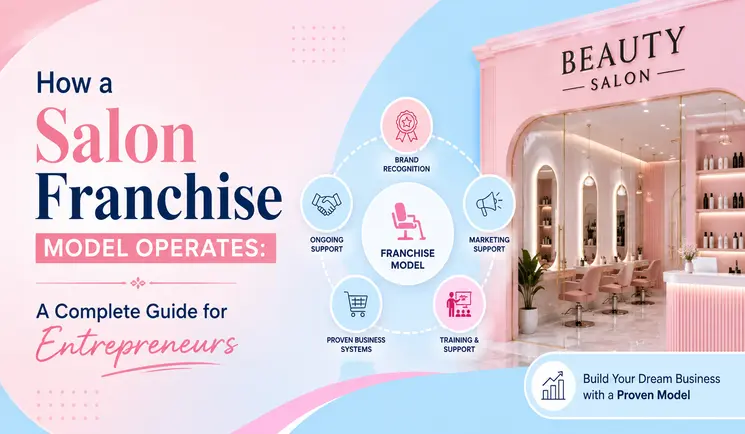
A salon franchise operates on a partnership structure between:
- Franchisor (Brand Owner): Provides brand name, systems, training, and operational framework
- Franchisee (Investor/Operator): Invests capital and manages day-to-day operations
Popular brands like Lakmé Salon, Naturals Salon & Spa, and Toni & Guy follow this model across India.
The Core Pillar: Standardisation
At the heart of every successful salon franchise is standardisation.
The franchisor defines:
- Service menu (hair, skin, grooming services)
- Pricing structure
- Interior design and layout
- Branding elements (logo, signage, uniforms)
- Operating procedures (SOPs)
This ensures that a customer walking into a salon in Mumbai, Delhi, or Bangalore experiences the same quality and service consistency.
Centralised Supply Chain Management
One of the biggest advantages of a franchise model is controlled sourcing.
- Products (haircare, skincare, retail items) are supplied by the brand or approved vendors
- Bulk procurement reduces costs
- Ensures authenticity and quality
For franchisees, this means:
- No need to search for suppliers
- Lower risk of counterfeit products
- Better margins through standardised pricing
Training & Staffing Support
The salon business heavily depends on skilled professionals, and franchises address this through structured systems.
Franchisors provide:
- Initial training for stylists and therapists
- SOP manuals for service delivery
- Ongoing skill development programs
- Regular audits and quality checks
This is why salon franchise opportunities are attractive even for first-time entrepreneurs without industry experience.
Technology Integration
Modern salon franchises are powered by technology, enabling better control and insights.
Typical systems include:
- POS (Point of Sale) for billing and revenue tracking
- Appointment scheduling software
- CRM tools for customer data and preferences
- Loyalty & membership systems
These tools help track:
- Daily revenue
- Repeat customer visits
- Service performance
- Inventory usage
Marketing & Brand Building
Unlike independent salons, franchise outlets benefit from centralised marketing efforts.
Franchisors handle:
- National advertising campaigns
- Social media branding
- Festive and seasonal promotions
- Influencer collaborations
This gives franchisees:
- Instant brand recognition
- Lower customer acquisition cost
- Faster market penetration
Revenue Streams in a Salon Franchise
Salon franchises generate income through multiple channels:
- Service Revenue (highest margin contributor)
- Retail Product Sales
- Bridal & Event Packages
- Memberships & Prepaid Plans
In return, franchisees typically pay:
- One-time franchise fee
- Ongoing royalty (8–15% of revenue)
Bangalore isn’t just growing in tech — it’s redefining luxury lifestyle. That’s why premium salons are becoming one of the city’s most promising investment opportunities.
By Tazul Haque
Explore More:- How to Apply for a Salon Franchise: A Step-by-Step Guide
Key Success Factors in a Salon Franchise
Even with a strong brand, success depends on execution at the outlet level.
1. Strategic Location
A high-footfall area can make or break the business.
- Premium salons perform best in affluent neighbourhoods
- Mid-range salons thrive in high streets and residential hubs
2. Strong Repeat Customer Base
Salon businesses rely on recurring visits:
- Haircuts every 4–6 weeks
- Skincare treatments monthly
Loyalty programs and memberships help build consistent revenue streams.
3. Brand Recognition
Established brands bring:
- Trust and credibility
- Ability to charge premium pricing
- Faster customer acquisition
4. Skilled Staff & Service Consistency
Quality service leads to:
- Positive word-of-mouth
- Higher customer retention
- Better online reviews
5. Operational Efficiency
Profitability depends on:
- Inventory control
- Staff productivity
- Cost management
- Minimising wastage
Challenges in the Franchise Model
While structured, the model comes with certain limitations:
- Royalty payments impact margins
- Limited flexibility in pricing and services
- Dependence on brand decisions
- High initial setup standards
Why Salon Franchises Are Growing in India
The rise of salon franchise opportunities is driven by:
- Shift from unorganised to organised market
- Increasing demand for hygiene and quality
- Growing middle-class and aspirational consumers
- Expansion into Tier II and III cities
Final Thoughts
A salon franchise model offers a proven, system-driven pathway to enter the beauty and wellness industry. It reduces risk, provides brand leverage, and ensures operational support—but success still depends on location, execution, and customer experience.
For entrepreneurs looking for structured growth with lower uncertainty, a franchise is a strong entry point into India’s booming salon market.
For more business and market insights, please contact us.
Contact Us