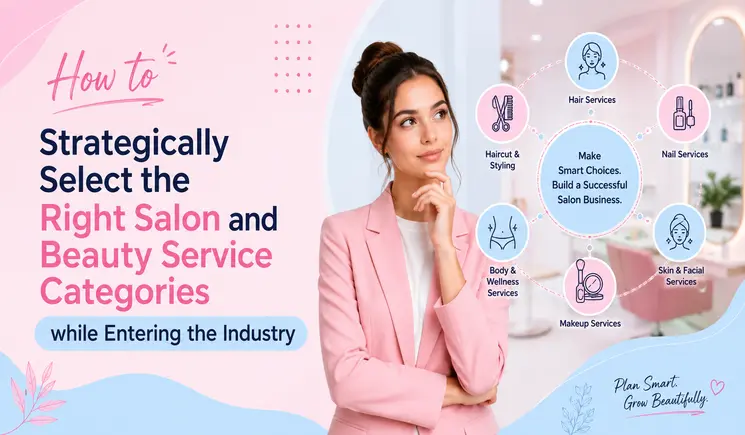
How to Strategically Select the Right Salon and Beauty Service Categories while Entering the Industry
India’s beauty and personal care industry has transformed into one of the fastest-growing lifestyle segments, driven by rising disposable incomes, urbanisation, social media influence, and increasing focus on self-grooming among both men and women. What was once considered an occasional luxury has now become a routine lifestyle expense, creating massive opportunities for entrepreneurs.
Table Of Content
- Understanding the Market Opportunity
- Step 1: Define Your Target Customer Segment
- Step 2: Evaluate Location & Market Dynamics
- Step 3: Choose the Right Salon Category
- 1. Budget / Local Parlours
- 2. Mid-Range Salon Chains
- 3. Premium & Luxury Salons
- 4. Salon Lounges (Experience-Based Concepts)
- Step 4: Analyze Investment vs Returns
- Step 5: Understand Consumer Trends Before Finalising
- Step 6: Franchise vs Independent Model
- Final Thoughts
For anyone planning to enter this space, the real question is not whether to invest, but which salon and beauty service category to choose. A strategic selection can define profitability, scalability, and long-term success.
Understanding the Market Opportunity
The salon and beauty services segment in India thrives on recurring demand and repeat customer behaviour. Services like haircuts, grooming, skincare, and wellness treatments are now part of monthly routines, ensuring predictable revenue.
At the same time:
- Tier II and III cities are witnessing rapid demand growth
- Consumers are shifting from unorganised players to branded, hygienic salons
- Male grooming is emerging as a strong revenue contributor
- Experience and premiumisation are becoming key differentiators
This makes category selection a critical strategic decision, not just an operational one.
Step 1: Define Your Target Customer Segment
Before choosing a category, clearly identify:
- Income level (price-sensitive vs premium consumers)
- Age group (students, professionals, families)
- Lifestyle preferences (functional vs experience-driven)
- Location type (metro, Tier II, residential, commercial)
Your category must align with who your customer is, not just what services you want to offer.
Step 2: Evaluate Location & Market Dynamics
Different formats work in different environments:
- Residential areas → Budget or mid-range salons
- High streets & malls → Mid-range to premium chains
- Affluent neighbourhoods → Premium/luxury salons
- Tourism or lifestyle hubs → Salon lounges & wellness concepts
Ignoring location dynamics is one of the biggest mistakes new entrants make.
Step 3: Choose the Right Salon Category
1. Budget / Local Parlours
Best for: Tier II & III cities, price-sensitive markets
This category focuses on essential grooming services such as:
- Haircuts
- Threading, waxing
- Basic facials
Why it works:
- High footfall and quick turnover
- Low investment and operating cost
- Strong repeat customer base
However, margins per service are lower, requiring volume-driven growth.
2. Mid-Range Salon Chains
Best for: Urban middle-class and young professionals
This is the most scalable and balanced segment, offering:
- Advanced hair styling
- Skincare treatments
- Bridal and occasion services
Key advantages:
- Strong brand positioning
- Moderate pricing with good margins
- Loyalty programs and repeat customers
This category is ideal if you want steady growth with manageable investment.
3. Premium & Luxury Salons
Best for: Affluent customers in metro cities
Premium salons focus on:
- Personalised consultations
- International techniques
- High-end product lines
You’ll typically see brands like Toni & Guy, BBlunt, and Jean-Claude Biguine operating in this space.
Why it works:
- High ticket size per customer
- Strong brand loyalty
- Experience-driven consumption
But it requires higher investment, skilled staff, and premium locations.
Read More:- How a Salon Franchise Model Operates: A Complete Guide for Entrepreneurs
4. Salon Lounges (Experience-Based Concepts)
Best for: Millennials, urban professionals, lifestyle-driven consumers
Salon lounges go beyond services—they create an experience ecosystem:
- Relaxed ambience
- Longer service durations
- Comfort-driven design
Key strengths:
- High customer retention
- Premium positioning
- Strong differentiation in crowded markets
This format is ideal for entrepreneurs looking to build a lifestyle brand, not just a service business.
Step 4: Analyze Investment vs Returns
Each category comes with different economics:
| Category | Investment | Margin | Scalability |
| Budget | Low | Moderate | High (volume-based) |
| Mid-Range | Medium | Good | Very High |
| Premium | High | High | Selective |
| Lounge | Medium-High | High | Brand-driven |
Choosing the wrong category for your budget can lead to cash flow challenges, even in a growing market
Step 5: Understand Consumer Trends Before Finalising
Key trends shaping category selection:
- Male grooming (20%+ revenue share in metros)
- Skin & wellness treatments growing faster than basic services
- Demand for hygiene and branded experiences
- Digital discovery & booking platforms influencing decisions
Your category should align with future demand, not just current trends.
Step 6: Franchise vs Independent Model
If you’re entering the market for the first time, a franchise model offers:
- Established branding
- Standardised service protocols
- Training and operational support
This is why salon franchise opportunities are gaining traction across India.
Final Thoughts
Selecting the right salon category is not about following trends—it’s about aligning market demand, location, investment, and customer expectations.
- If you want volume and stability → Go for budget or mid-range
- If you want brand value and higher margins → Choose premium
- If you want differentiation and long-term loyalty → Build a salon lounge
The Indian beauty industry is expanding rapidly, but success will depend on how strategically you position your business within the right category.
For more business and market insights, please contact us.
Contact Us
📲 Instagram: @uptrendindiaofficial & @uptrendpartnersofficial
Author: Tazul Haque, Founder & Wellness Business Strategist